
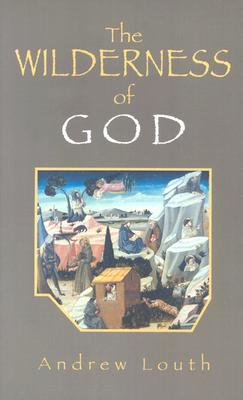
The Wilderness of God
- List Price: $20.00
- Binding: Paperback
- Publisher: Abingdon Pr
- Publish date: 03/01/1997
Beginning with Charles de Foucauld, Andrew Louth shows how the appeal of the desert was embraced by a variety of figures, such as Julian of Norwich and St. John of the Cross, and has persisted until the present day. It is an engrossing investigation which takes the reader through the attempts to discover the values of the desert in medieval anchorism; in the sixteenth-century Carmelite reform; in the Russian forest and in the experience of mental desolation in the lives of such people as Pere Surin and Pere Huvelin.
The Wilderness of God brings to life the rich imagery of the desert which can be found in the Bible and the liturgy, in poetry and prose. In all its forms the wilderness emerges as a tradition that goes back to the very limits of what is humanly possible, and there, "somewhere on the other side of despair", discerns "the city that has foundations, whose builder and maker is God".