
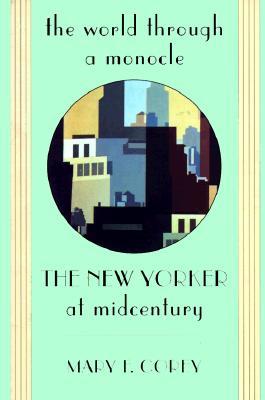
The World Through a Monocle the New Yorker at Midcentury
- List Price: $28.50
- Binding: Hardcover
- Publisher: Harvard Univ Pr
- Publish date: 04/01/1999
Mary Corey mines the magazine's editorial voice, Journalism, fiction, advertisements, cartoons, and poetry to earth the preoccupations, values, and conflicts of its readers, editors, and contributors. She delineates the effort to fuse liberal deals with aspirations to high social status, finds the magazine's blind spots with regard to women and racial and ethnic stereotyping, and explores its binding concern with elite consumption coupled with a contempt for mass production and popular advertising. Balancing the consumption of goods with a social conscience which prized goodness, the magazine managed to provide readers with what seemed like a coherent and comprehensive value system in an incoherent world.
Viewing the world through a monocle, those who created The New Yorker and those who believed in it cultivated a uniquely powerful cultural institution serving an influential segment of the population. Corey's work illuminates this extraordinary enterprise inour social history.