
Due to planned maintenance, your school has disabled school system log-ins at this time.
You may continue shopping as a guest, or by creating a bookstore-only account.
Please complete the purchase of any items in your cart before going to this third-party site.
Also note that if you qualify for financial aid, items purchased through this site will not be subject to
reimbursement.
Color illustrated wraps. 84 pp., extensively illustrated, mostly in color.
[...]
Color illustrated wraps. 84 pp., extensively illustrated, mostly in color. Issued in conjunction with several 1999-2000 exhibitions that featured examples of the encaustic painting technique. "Perhaps one of the greatest mysteries associated with encaustic painting is why the history of this medium is so fraught with controversy, " writes Danielle Rice in the opening essay. "Is it perhaps the magic of a medium whose ingredients, wax, fire and pigment, seem almost alchemical that engenders such argument? Or might it be the medium's very antiquity and the paucity of sources regarding encaustic practice? " Additional essays appear by Gail Stavitsky and Richard Frumess. Catalogue lists 78 works, almost all of them illustrated. A fantastic exhibition on an art technique seldom addressed. Scarce.
Description:
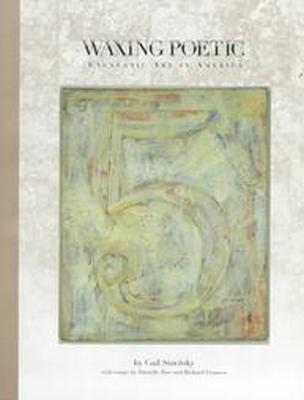
Published in conjunction with an exhibition devoted to the encaustic medium, Waxing Poetic: Encaustic Art in America examines a painting method first used by the ancient Greeks and Romans. The word "encaustic" derives from the Greek term "enkaustikos, " meaning "to burn in." The basic technique calls for dry pigments to be mixed with molten wax on a warm palette and applied to any ground or surface. A heat source is passed close to the surface, burning in and fusing the colors. Currently enjoying a widespread revival among painters, sculptors, and even printmakers, the encaustic medium's resurgence has been bolstered by the availability of commercially prepared paints and the availability of electrically heated equipment.
In this lavishly illustrated volume, featuring more than too art works, Gail Stavitsky examines the twentieth-century encaustic renaissance. She discusses the work of such well-known artists as Jasper Johns, Jackson Pollock, Robert Rauschenberg, Lynda Benglis, and many others who have turned to this ancient medium to express their aesthetic, philosophical, and environmental concerns. The other two essays in this volume are "Encaustic Painting and Revivals: A History of Discord and Discovery" by Danielle Rice and "Encaustic Painting as a Contemporary Paint Medium" by Richard Frumess.
Expand description
Product notice
Returnable at the third party seller's discretion and may come without consumable supplements like access codes, CD's, or workbooks.

Color illustrated wraps. 84 pp., extensively illustrated, mostly in color.
[...]
Color illustrated wraps. 84 pp., extensively illustrated, mostly in color. Issued in conjunction with several 1999-2000 exhibitions that featured examples of the encaustic painting technique. "Perhaps one of the greatest mysteries associated with encaustic painting is why the history of this medium is so fraught with controversy, " writes Danielle Rice in the opening essay. "Is it perhaps the magic of a medium whose ingredients, wax, fire and pigment, seem almost alchemical that engenders such argument? Or might it be the medium's very antiquity and the paucity of sources regarding encaustic practice? " Additional essays appear by Gail Stavitsky and Richard Frumess. Catalogue lists 78 works, almost all of them illustrated. A fantastic exhibition on an art technique seldom addressed. Scarce.
Color illustrated wraps. 84 pp., extensively illustrated, mostly in color.
[...]
Color illustrated wraps. 84 pp., extensively illustrated, mostly in color. Issued in conjunction with several 1999-2000 exhibitions that featured examples of the encaustic painting technique. "Perhaps one of the greatest mysteries associated with encaustic painting is why the history of this medium is so fraught with controversy, " writes Danielle Rice in the opening essay. "Is it perhaps the magic of a medium whose ingredients, wax, fire and pigment, seem almost alchemical that engenders such argument? Or might it be the medium's very antiquity and the paucity of sources regarding encaustic practice? " Additional essays appear by Gail Stavitsky and Richard Frumess. Catalogue lists 78 works, almost all of them illustrated. A fantastic exhibition on an art technique seldom addressed. Scarce.