
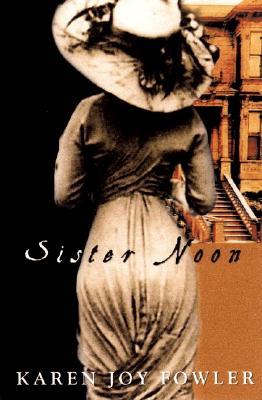
Sister Noon
- Binding: Hardcover
- Publisher: Marian Wood Book
- Publish date: 01/01/2007
Lizzie Hayes is a woman of a certain age, who, by reason of family, is a member of this elite. But Lizzie, placid, decorous, obedient as far as they eye can see, hides within her a rebellious heart. Only three time in her life has she ever heeded that heart: refusing to wed any of the three men her wealthy father thrust upon her, infuriating him as much by her stubbornness as by her unheard of act of rebellion. Now she accepts her role as a maiden lady in somewhat straightened circumstances (for in refusing her father's demands, she was all but disinherited and now lives off his impecunious dole), something of a charity case to her social set, more to be pitied than loved; a good woman who performs good acts as the treasurer of the Ladies' Relief and Protection Society Home, which looks after orphans and gentlewomen in distress; a docile if unenthusiastic attendee at her set's frequent at homes. And a secret reader of novels.
Into her world comes the famous (to man San Franciscans, the infamous) Mrs. Pleasant, bringing with her a small, withdrawn, sallow child of perhaps five. She has,Mrs. Pleasant says, just lost her mother. Little Jenny Ijub herself says almost nothing, which is perhaps just as well because once she does speak, it's of a home that is very grand -- something that convinces the other children she is telling lies. But Lizzie isn't so sure. Mary Ellen Pleasant is thought to do nothing that isn't in her own best interest: Surely she knows more about the child -- likely, who the father is, likely that he is rich. But then, Mrs. Pleasant was known to have said that words were invented so that lies could be told -- surely one reason there were so many contradictory accounts of her life. Although she worked as a housekeeper, she was as non as a railroad magnate's widow: Some of the city's wealthiest men came to her for financial advice. She was an angel of charity and a voodoo queen. San Francisco's colored worshipped her; they feared her. She'd been taken for white but insisted she was colored. She had bankrolled John Brown in his raid on Harper's Ferry -- and she trafficked in prostitution. For a price, she could make a man die of love. She ran a home for unwed mothers -- and sold the infant girls to the Chinese tongs. She was notorious, scandalous, mysterious---food for the waging tongues of a city grown fat on gossip.
But with her appearance on the Ladies' Relief's doorstep, she brings with her not only mystery and a whiff of disrepute. She brings the key that will unlock Lizzie's romantic, rebellious heart. "You can do anything you want", she tells Lizzie early on. "You don't have to be the same person your whole life".
"Sister Noon" is a novel about change, about breaking free of destiny, and in Lizzie Hayes, Karen Fowler has created a heroine ofsuch unassuming but appealing proportions that we cannot help but identify with her quest. Lizzie's docility masks a quick mind and a passionate heart, and given Fowler's subversive wit, she quickly becomes the camera's eye through which we see the follies of the gilded era.
Not surprisingly, since Fowler's magic is in her crafty playfulness and wry wit as well as in her storytelling. As The San Francisco Chronicle said, hers is "as astonishing narrative voice, at once lyric and ironic, satiric and nostalgic . . . she can tell stories that engage and enchant".
| Seller | Condition | Comments | Price |
|
Evergreen Goodwill
|
Good

|
$2.65
|
|
Half Price Books Inc
|
Very Good
|
$4.37
|
|
Half Price Books Inc
|
Very Good
|
$7.03
|
|
HPB Inc.
|
Very Good
|
$8.98
|
|
Novel Ideas Books
|
Like New |
$9.00
|
|
The Book House - Saint Louis
|
Very Good
|
$13.50
|
|
Satellite Books
|
Like New
|
$15.18
|
|
Bonita
|
Good
|
$33.42
|
|
Just one more Chapter
|
New |
$66.60
|